1

RCA Cult Recording “I Can’t Keep from Cryin’ Sometimes”

Posted by on Apr 22, 2010 in Jazz Guitar | 0 comments

In 1970, I was a young jazz guitar player working at RCA studios in New York. This particular date was a session for an album titled “Deirdre Wilson Tabac”. Sonny Casella was the visionary producer. From this album emerged a hit record called “I Can’t Keep from Cryin’ Sometimes”. Throughout the years, this recording has become somewhat of a cult classic especially in Europe. One copy of this record sells for what has been reported to be $400.00 to $600.00.

Read More

Demystifying Cut Time in Performing Music

Posted by on Apr 20, 2010 in Music | 1 comment

Cut time is a source of confusion for many musicians. What exactly does it mean and how do you apply it?

Too often cut time is thought of as having two beats in a measure. There are not two beats in a measure of cut time – there are four beats in a measure of cut time. So what makes this different than common time i.e. four beats in the measure?

Read More

Sleeping Through Life: How Sleep Apnea Can Affect Your Life Without You Even Knowing It

Posted by on Apr 13, 2010 in Careers | 1 comment

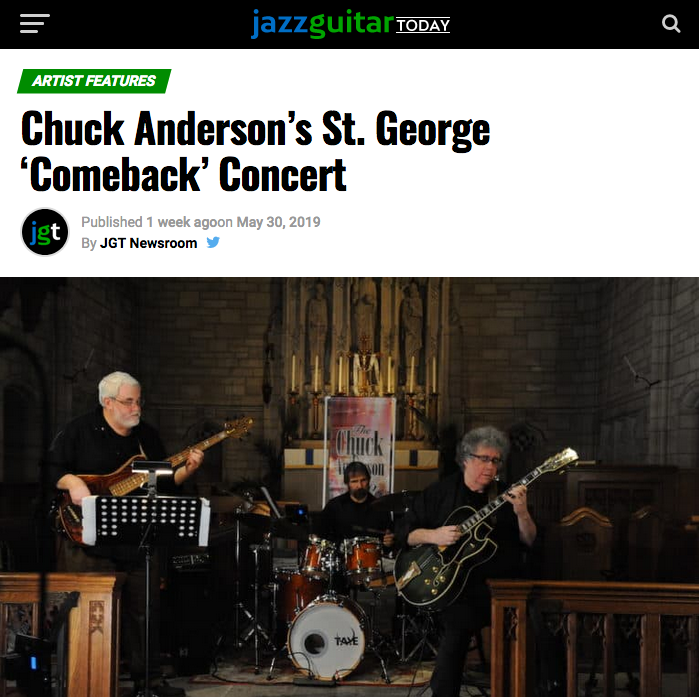
In the mid 1970′s, I formed the Chuck Anderson Trio with Al Stauffer and Ray Deeley.The East Coast jazz group focused primarily on my original writing but also included unique interpretations of jazz classics. We gave concerts and recorded our first critically acclaimed album called “Mirror Within a Mirror”. My reputation as a rising young jazz guitarist was well on its way.

In the early 80′s, the group disbanded as we all pursued different musical directions. I continued working in the industry dividing my time between teaching, writing, researching and playing.

Read More

The Internet and Musicians – An Interview with Eric Hebert

Posted by on Apr 4, 2010 in Uncategorized | 0 comments

The internet holds enormous potential for jazz musicians.

Many of us have little to no idea of how to take advantage of it. We tend to have websites, Facebook and maybe Twitter. How many of us are happy with the results we get from our efforts? 

After much searching, I have found Delaware Marketing & Advertising firm Evolvor.com. The following interview was conducted with Eric Hebert of Evolvor on the subject of maximizing exposure through the internet.

Read More

Win a Free Copy of “Freefall” in My All About Jazz Contest

Posted by on Mar 22, 2010 in Jazz Guitar | 0 comments

All About Jazz, the premiere jazz website is running a contest. You can enter by clicking on the following link :

When the contest ends on April 17th, five winners will be chosen to receive my new CD “Freefall” with the Chuck Anderson Trio on the Dreambox Media label.

So don’t forget to enter and take advantage of everything that All About Jazz has to offer.

Read More

Article In Jazz Insider Magazine On the Topic of Practice

Posted by on Mar 5, 2010 in Music Education | 0 comments

Practice is that inevitable “dues-paying” time that everyone must invest to pursue music. In the self study approach, the most difficult aspect of practice is the organization of musical and technical principles. Too often the player works in circles not really progressing, not knowing what to practice.

Becoming aware of this lack of progress, he begins searching for sources of information. Books, recordings and other musicians are primary sources. Though these approaches are sometimes helpful, they are not flexible enough to solve specific problems for specific students. An individual can form habits from misinformation that can be detrimental to his progress for years.

Read More

Modular Phonetic Rhythm: A Revolutionary Approach for Learning and Advancing Jazz Guitar

Posted by on Feb 16, 2010 in Jazz Guitar | 3 comments

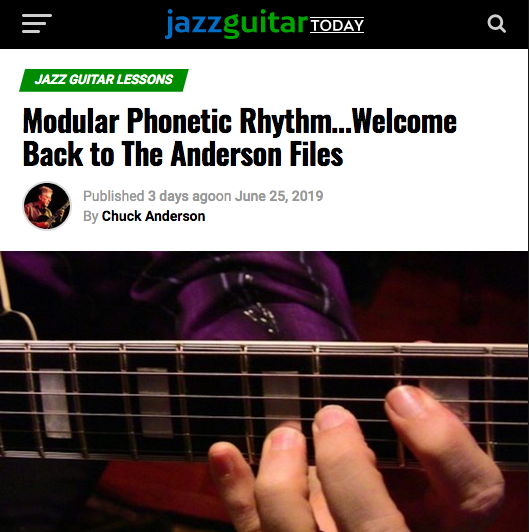
Modular Phonetic Rhythm represents a significant advance in the teaching and application of rhythm. Eliminating many inefficient aspects of rhythm education, Modular Phonetic Rhythm streamlines the traditional educational approach, resulting in a reflexive reaction to rhythm.

Jazz guitarists have never had a way to organize the subject of rhythm in a way that would systematically benefit their solos and their comping. Modular Phonetic Rhythm offers a solution.

Read More